
She told us she was on a GLP-1!
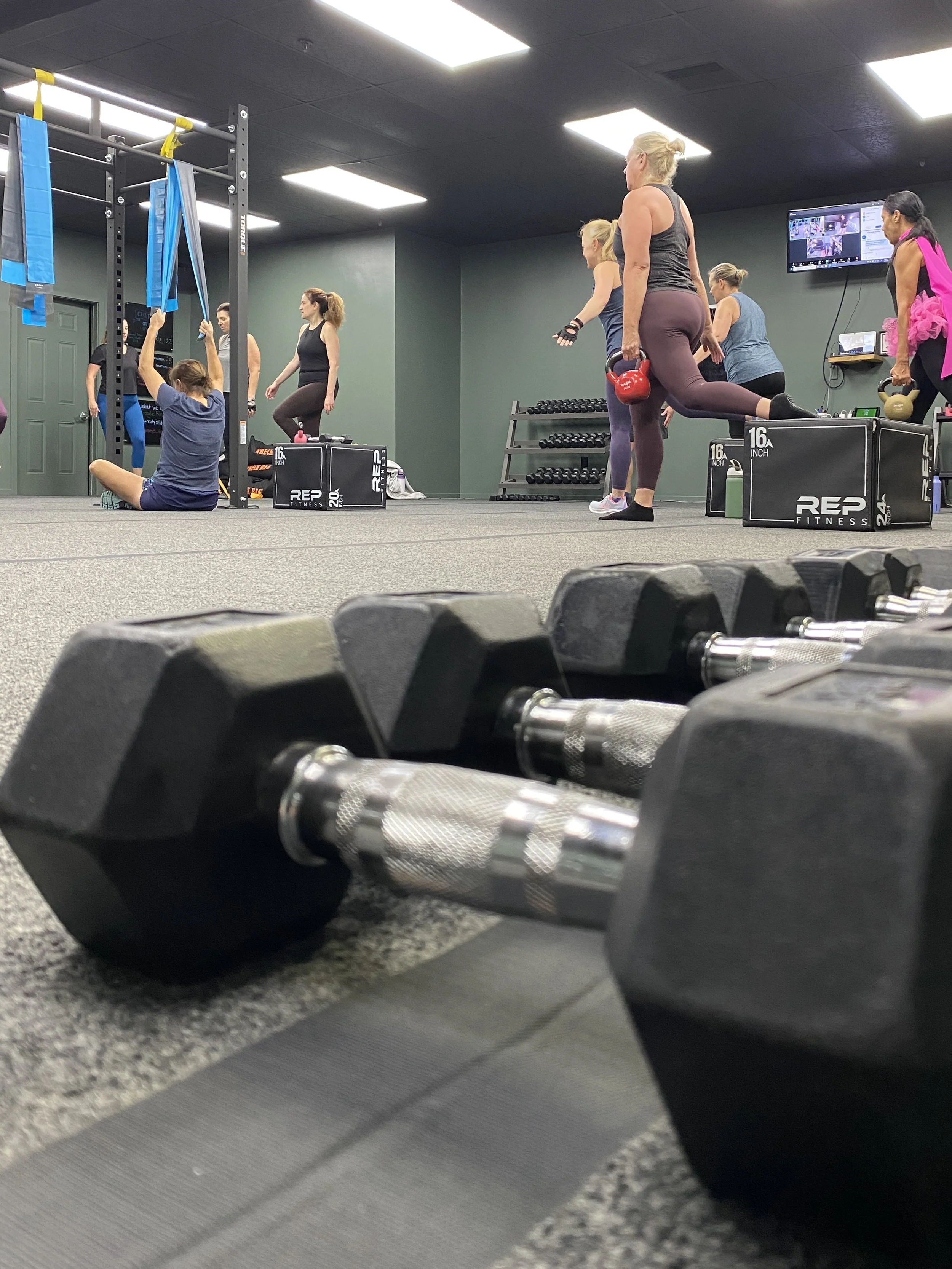
Our reaction might surprise you!
Every few days, a client tells us that they are on a GLP-1.
Our response?
“Thank you for telling us.”
No judgment. No raised eyebrows. No lecture.
We are neither the judge nor the jury regarding choices you’ve made with your doctor.
Our job is to support you and the medically informed choices you make with your doctor.
And if you’re taking a GLP-1, there are a few things we really, really want you to know.
Weight loss is not the same thing as fat loss.
One of the reasons GLP-1 medications have been so transformative for many people is that they can make eating less feel much easier. Taking GLP-1s decreases your desire to eat. (In fact, it reduces your desire to do many things, which is why it’s being studied as a remedy for addictions like alcoholism and gambling.)
They can reduce appetite and increase feelings of fullness, which can make it possible to sustain a calorie deficit and lose significant amounts of weight.
And for someone who has struggled with their weight for years, that can be life-changing.
But the number on the scale doesn't tell the whole story.
When you lose weight rapidly, you don't only lose body fat.
Some of the weight can come from lean tissue, including muscle.
Research on GLP-1 medications shows that fat mass generally decreases more than lean mass, which is good news. But a meaningful portion of total weight lost can still come from lean mass. Recent research puts that proportion somewhere around 25–39%, depending on the medication and the study. (Source)
And this is where we, as coaches, get interested.
Because we don't just want you to be lighter. We want you to be stronger, healthier and more capable.
Why do we care so much about muscle?
Because muscle isn't just about looking toned.
Muscle helps you climb stairs. Carry your groceries. Get up off the floor. Play with your grandchildren. Lift your suitcase. Protect your independence as you age.
It also plays an important role in glucose regulation, metabolism and physical function.
Losing some lean mass during weight loss doesn't automatically mean something is wrong. In fact, some lean-mass loss can happen with almost any significant weight-loss intervention.
But losing as little muscle as possible while losing body fat is a much better outcome.
That's what we mean when we talk about the quality of weight loss.
The goal isn't simply:
“How much weight did you lose?”
It's:
“How much fat did you lose, and how much muscle and strength did you keep?”
So what can you do about it?
This is where your habits matter.
1. Lift weights.
This is a big one.
Resistance training is one of the most important tools we have for telling your body, “Hey, we still need this muscle.”
When you're eating less and losing weight, your body has less energy coming in. Resistance training provides an important stimulus to maintain muscle and strength during that process.
And no, you don't need two-hour workouts.
You don't need to train seven days a week.
You need consistent, progressive resistance training.
That's one of the reasons we are so passionate about strength training at Revity3.
We're not trying to make you burn as many calories as possible.
We're trying to help you build and preserve the stuff you really want to keep.
2. Eat enough protein.
This one can get tricky when your appetite disappears.
If you're simply not hungry, getting enough protein, and enough overall nutrition,can become surprisingly difficult.
That's why we don't want to hear, “I'm barely eating, but I'm losing weight!” and celebrate that as an automatic win.
You may be losing weight.
But are you getting enough protein?
Are you eating enough nutrient-dense food?
Are you staying hydrated?
Are you getting enough fiber, vitamins and minerals?
Your body still needs raw materials to maintain muscle, even when your appetite says, “No thanks.”
Protein needs vary from person to person, and your physician or registered dietitian can help determine an appropriate target. Your Revity3 coaches can help you track it and stay on target. Current nutrition guidance for people using GLP-1 medications emphasizes adequate protein intake, particularly when combined with resistance training. (Source)
3. Don't chase the fastest possible weight loss.
We understand the excitement.
The scale is finally moving.
Clothes are fitting differently.
You feel like you're finally getting somewhere.
But faster isn't always better.
Rapid weight loss can increase the risk of inadequate nutritional intake and can contribute to loss of lean tissue. Significant weight loss can also be associated with things like gallstones, nausea, and, in some people, temporary hair loss.
The goal shouldn't be to see how little you can eat or how quickly you can make the number on the scale drop.
The goal is healthy, sustainable weight loss that leaves you stronger, not weaker.
4. Pay attention to what your body is telling you.
If you're experiencing significant nausea, vomiting, persistent GI symptoms, dizziness, weakness, dehydration or you're consistently struggling to eat enough, talk to your healthcare provider.
Don't simply assume that feeling terrible is the price you have to pay for losing weight.
Your medication, dosage and nutrition strategy are medical matters to discuss with the professional prescribing your medication.
And please tell your coach what's going on.
This is WHY we want you to tell us.
Because knowing what's going on helps us coach you better.
Maybe your appetite is way down.
Maybe you're struggling to get enough protein.
Maybe you're feeling weaker than usual.
Maybe your energy has changed.
Maybe you've lost weight quickly and your clothes are falling off, but you're also noticing that some of your BUILD workouts are getting harder.
That's information we want to know.
It doesn't change our opinion of you.
It simply helps us do our job.
We're not here to judge your weight-loss journey.
If a GLP-1 medication is part of your medically supervised plan, we're here for you.
And if you're not taking one, we're here for you too.
Our job doesn't change:
Help you move better.
Help you get stronger.
Help you preserve the muscle you've worked so hard to build.
Help you nourish your body.
Help you recover.
And help you build a body that serves you for a very, very long time.
So if you're taking a GLP-1, please tell your coach.
We won't judge you.
We'll just help you train smarter.
We're not anti-GLP-1. We're pro-muscle. 💪
Coaches Dylan & Melly
Note: This article is for general educational purposes and is not medical or nutritional advice. GLP-1 medications should be used under the supervision of a qualified healthcare professional. Talk with your prescribing clinician or a registered dietitian about your individual medication, nutrition and protein needs.
